The organic food market continues to grow across the world, which was set in motion by environmental and health concerns. As you walk around your grocery store, you may see many foods with the organic label, but what actually makes a food organic?
Organic food standards set by the United States Department of Agriculture (USDA) limit the synthetic fertilizers, pesticides, antibiotics and genetically modified organism (GMO) content in the food source.
The USDA has 4 distinct labels for organic food being sold in stores. They are labeled as followed:
1. “100% Organic”: must be made up of 100% certified organic ingredients. The label will include the name of the certifying agency and may include the USDA Organic Seal.
2. “Organic”: ingredients must be certified organic unless specifically allowed per the National List. Products can’t exceed a combined total of 5% of allowed non-organic content. The USDA Organic Seal may be used, and the certifying agency name must be included on the label.
3. “Made with Organic ___”: 70% of the product must be certified organic ingredients. The USDA Organic Seal cannot be used on the product and cannot be represented as organic.
4. “Specific Organic Ingredients”: includes multi-ingredient products with less than 70% certified organic content and doesn’t need to be certified. The USDA Organic Seal and the word ‘organic’ cannot be used.
Nutrition Makeup
One of the reasons organic foods are sought after, is due to the rumor that organic foods contain higher amounts of nutrients than conventional foods. Many studies have been conducted in order to understand this claim. Some studies found that organic produce may contain higher amounts of total phenols, vitamin E, vitamin C, and total antioxidant capacity. However, after a complete analysis was conducted the levels of all of the listed nutrients were not always significantly higher in organic foods compared to non-organic foods. Other studies determined that conventional foods contained higher levels of phosphorous, potassium and total protein. Phosphorous, potassium and protein are all components of standard fertilizers, which explains the higher levels in non-organic produce. For most individuals, these higher levels are safe for consumption.
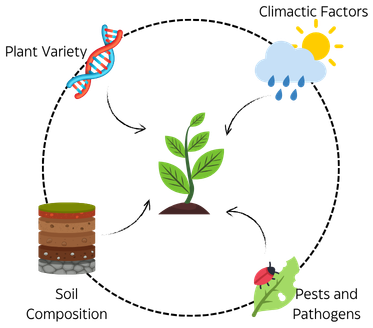
It is important to recognize that most current studies that do find significant differences in nutrient content fail to address all of the variables involved in growing produce. To decide if organic foods are truly more nutritious, there are several factors that need to be taken into account. The variables of the variety of plant, the soil quality and the growing conditions all must be tightly controlled to find the true answer.
Chemicals and Produce
What consumers don’t usually know is that the USDA still allows pesticide use on organic products. The types of chemicals that are used are strictly regulated and are well below the upper limit of safe levels.
Prior to the USDA’s adoption of stricter policies for chemical use, there were several medical conditions that were directly linked to exposure to pesticides. Cancer having the strongest link than any other disease. One study found a strong relation between abdominal cancer rates and high levels of weed killer contamination in water sources. Several studies examining animal-based foods like meat and honey have identified concerns for pesticide residues increasing the risk of cancer development.
Other conditions that are seen with breathing-in these chemicals include depression, anxiety, changes in brain development in fetuses, cell damage and disruption of the endocrine glands.
The best way to help avoid consuming these chemicals whether you choose to consume organic or non-organic products, is food safety. Washing your produce will lessen the amount of chemicals you ingest.
Chemicals and Food Safety
According to the FDA the most effective way of cleaning produce is to hold the fruit or vegetable under flowing water. Scrubbing firm produce with a clean brush can help remove pesticides that are sitting in pores of the fruit or vegetable. Rubbing softer produce like grapes and using a gentle spray on fragile produce like berries will help remove residues. You can also remove the peels of produce and discard the outer leaves of lettuce or cabbage.
Unfortunately, no method, including produce wash and soap, is 100% effective in removing pesticide residues. It was determined that after undergoing a normal household cleaning regimen, non-organic produce still had 38% pesticide residue left on its surface. While organic produce that went through the same cleaning process only had 7% pesticide residue left.
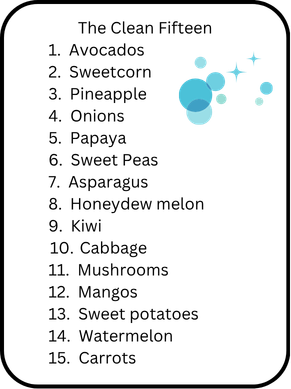
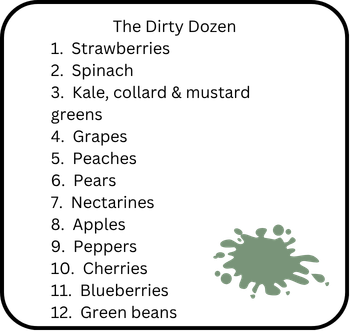
Even though washing and peeling produce does not completely remove pesticide residues, you can take extra precautions to keep pesticides out of your diet. The Environmental Working Group (EWG) releases two lists indicating which produce are the cleanest and dirtiest in regard to pesticide residue. These lists are “The Dirty Dozen” (above) and “The Clean Fifteen” (below). These lists are ranked in order.