Fact or Fiction: Sugar Consumption and Cancer
Being that this is our second edition of “Fact or Fiction”, I thought it would be best to address one the most talked about topics related to cancer. That is, how sugar impacts cancer development and treatments.
Understanding the Studies
What gets confusing for patients and health care workers alike? What the overall takeaway of a research study is. Most results of studies are reported as a brief overview lacking important details. For instance, many studies are conducted in extreme circumstances.
Studies can also have a limited scope that does not take into account other factors. While sugar has been directly linked to an increase of cancer risk, excess sugar intake is also directly linked excess body fat. This is one of the many reasons research studies regarding many nutrition topics changes from year to year. Make sure to confirm your information before implementing any diet changes.
Breakdown of Sugar at a Cellular Level
Back in the 1920's a German scientist by the name of Otto Warburg discovered that cancer cells tended to consume more glucose (main type of sugar in the blood) than other non-dividing tissues. He also discovered that cancer cells breakdown sugar through a process that is less efficient at creating pure energy. Instead, a byproduct of lactate is left in the cell. We now call this the Warburg Metabolism.
In a healthy cell, sugar is broken down in a more energy efficient way that produces energy for the cell to use for normal functions. Sugar is an essential energy source that all cells need to survive. In fact, it is the preferred fuel source of brain cells and white blood cells. Due to the less proficient process of cancer cells, cancer cells often need more sugar to grow than healthy cells.
For the cancer cells, the result of producing lactate instead of more usable energy is actually beneficial for their survival. The lactate created helps develop other cancer cells and allows them to become more resistant to cell death by avoiding the natural immune system.
After the discovery of the Warburg Metabolism the theory that eliminating sugar in the diet would stop the growth of cancer and increase success in treatments evolved.
Choose Your Sugar Wisely
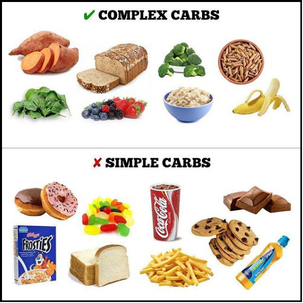
There are several types of sugar that can occur in food. Generally, sugar molecules are referred to as carbohydrates. Common sources of carbohydrates include fruits, vegetables, dairy products, nuts, grains, seeds, and legumes. On a molecular level, carbohydrates can appear in two specific forms. The first is called a simple carbohydrate. Simple carbohydrates are easily broken down for quick energy. While the other form, complex carbohydrates take more time to enter the blood stream and have a longer lasting effect on energy levels.
Research has shown that there is a direct correlation between consuming large amounts of simple carbohydrates and increased cancer risk, as well as increasing risk of mortality. However, complex carbohydrates are not associated with increased mortality but actually may improve survival.
Before you write off simple carbohydrates forever, they do have a purpose in the diet during treatments. There may be a time where food does not sound appealing, it may taste different, or eating becomes difficult. At this point the benefits of eating simple carbohydrates outweigh the risks.
Take Aways:
Focus on consuming a balanced diet
Avoid large amounts of refined carbohydrates that lack fiber and foods with added sugars
Talk with your doctor or registered dietitian before eliminating foods from your diet
