Fact or Fiction: Red Meat and Cancer
Welcome to “Fact or Fiction”, where we look at the science behind nutrition trends and determine if they are fact or fiction. This month we are diving into the research surrounding red meat and the role it plays in cancer development.
First off, what is red meat? Red meat is defined as an animal muscle that is deep red in color when it is raw. The deep red color is from the iron-rich protein, myoglobin. Myoglobin is also present in white meat like chicken but is found in much lower quantities. Common red meats include beef, pork, lamb, venison, veal and goat.
Hundreds of studies have been conducted over decades investigating the connection between red meat and cancer. After reviewing this extensive research, the International Agency for Research on Cancer classified red meat as a Group 2A carcinogen. This classification deems red meat “probably carcinogenic to humans”. The word “probably” in this categorization, still leaves a lot of unanswered questions.
To break it down further, cancer-based studies that have investigated only pure red meats and avoided any ultra-processed meats (bacon, sausage, salami etc.) in the study, have come back with mixed outcomes. However, a handful of cancers including colon, rectal, prostate, pancreatic, breast, hepatocellular, lung, renal, and uterine cancers have all been strongly linked to red meat consumption.
Iron: a vital nutrient’s possible role in cancer development
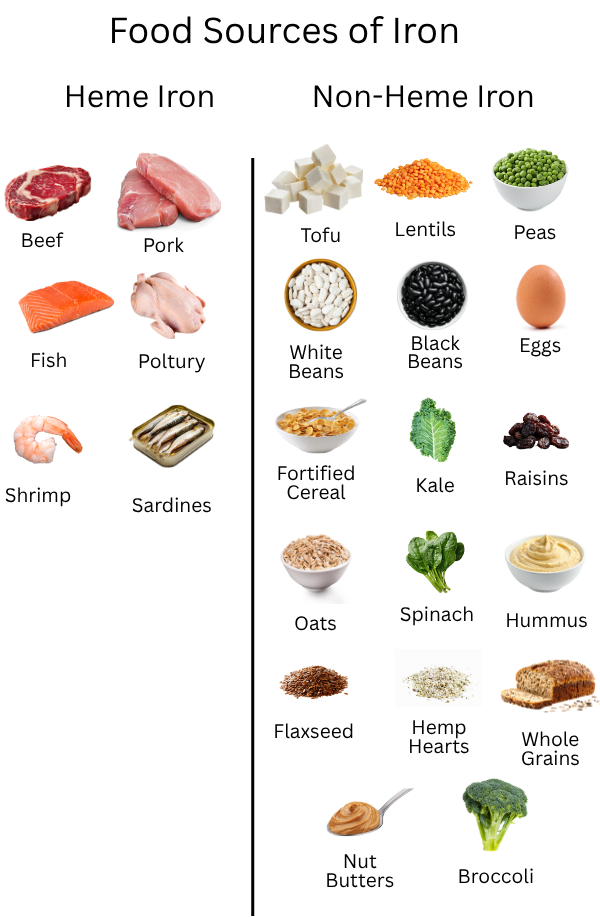
A potential factor contributing to cancer development is excess iron in the diet. But not all iron is made equally. Dietary iron is found in two forms -- heme and non-heme iron. Heme iron is more easily absorbed in the body and is found in exclusively in animal sources such as meat, poultry and fish. Non-heme iron requires extra steps to be absorbed and is mostly found in plant sources.
Recognizing these different forms of iron is important, especially as it relates to cancer. If individuals consume large amounts of iron regularly, iron levels in the blood can become high. This can be detrimental if there is a significant amount of heme iron. Iron in the heme form is less stable than non-heme iron. Due to its instability, heme iron will go through a chemical reaction to become its most stable form, non-heme. A product of this chemical reaction is a free radical or an unstable molecule.
The free radical causes damage to DNA in healthy cells which increases the risk of cancerous cells developing. Other factors in our body can influence the chemical reaction to occur over and over again in an endless cycle.
The chemical reaction that creates free radicals does not provide any increased risk of developing cancer if appropriate levels of iron are consumed. Consuming more foods that contain non-heme iron can also lower your risk, because non-heme iron is already in the most stable form. Researchers still are unsure to what extent excess iron contributes to the development of cancer. Research is ongoing.
What does this mean?
Some of you are probably wondering if this means you should avoid red meat. The answer is no.
Red meat is still a great nutrient dense food that benefits the body. The key is to mix up your menu. Aim to eat no more than two, nine-ounce servings of red meat a week. Try adding plant-based sources of iron or lower iron containing meat to your diet. Pair plant-based iron sources with a citrus fruit or other vitamin C rich source to help with non-heme iron absorption.
